

The Senate HELP Committee advanced eleven bipartisan healthcare bills on 22 July. The coverage focused almost entirely on one of them. For an employer with between twenty-five and a hundred and twenty-five people on the plan, the useful question is narrower: which of these would show up in a renewal, and when.
The short answer is three. The rest are worth knowing about and not worth losing sleep over.
Why this lands harder on smaller employers
A company with two thousand employees has a benefits team and a pharmacy analyst. A company with sixty has whoever in HR drew the short straw. Both absorb the same rate pressure. The Massachusetts Division of Insurance approved small-group increases averaging eleven to thirteen percent for 2026, driven largely by drug spend and by care migrating into higher-cost settings.
The eleven bills sort into four groups: price transparency, prescription drug cost and safety, healthcare workforce, and public health. Nearly all the near-term dollars sit in the first two.
Price transparency, which is the real lever
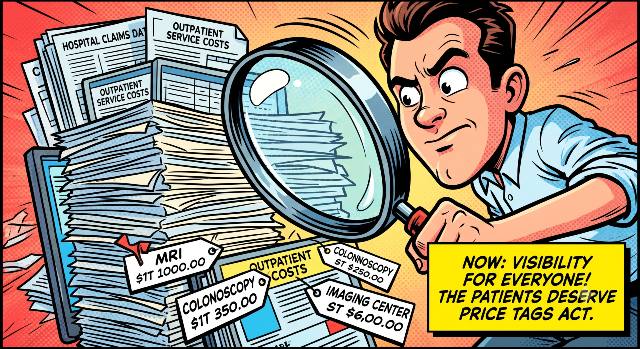
The Patients Deserve Price Tags Act (S. 2355)
This is the one to watch. It codifies and extends hospital price transparency rules out to ambulatory surgery centres, imaging centres and clinical labs, and it strengthens a plan sponsor’s ability to actually analyse its own claims data.
That last part is what matters. Once you can compare what an MRI costs at a hospital outpatient department against a freestanding imaging centre in the same zip code, steering becomes a real strategy rather than a slide. Moving even a fifth of imaging spend out of hospital-based sites bends a renewal in a way plan design changes rarely do.
It also reinforces the fiduciary obligations the Consolidated Appropriations Act already put on plan sponsors. Expect phased implementation — academic medical centres have concerns and they are not without leverage.
Drug cost and safety
The INSULIN Act of 2026 (S. 4189)
Caps insulin cost-sharing at $35 a month for a thirty-day supply on commercial plans, starting in plan year 2027, with no deductible on selected products. In 2028 it becomes the lesser of $35 or twenty-five percent of net price. It also requires PBMs to pass through one hundred percent of insulin rebates to the plan sponsor.
If you have diabetic employees, the immediate effect is adherence — people take medication they can afford, and fewer of them end up in an emergency department. The premium effect follows later and indirectly.
Expedited Access to Biosimilars Act (S. 1414)
Quiet, and consequential. It modernises the FDA’s biosimilar approval pathway, which brings cheaper alternatives to expensive biologics — arthritis, autoimmune, oncology — to market faster. On a group of eighty, one six-figure specialty claim reshapes a renewal. Anything that shortens the road to a lower-cost equivalent is worth more to a small group than to a large one.
Two smaller ones
The CLEAR LABELS Act (S. 3788) requires country-of-origin labelling for finished drugs and active ingredients — supply-chain resilience rather than cost. The SAFE Drugs Act (S. 3794) tightens FDA authority over mass-compounded drugs, aimed squarely at compounded GLP-1s. If you are weighing GLP-1 coverage for 2027, that strengthens the case for a structured formulary approach over open-ended reimbursement.
Workforce, which you feel indirectly
The EMPOWER for Health Act (S. 4110) reauthorises HRSA’s Title VII health professions programmes through FY2030 with loan repayment for primary care, paediatrics, geriatrics and dentistry. The Title VIII Nursing Workforce Reauthorization Act (S. 1874) does the same for nursing education and adds simulation and telehealth training.
Neither touches a renewal directly. Both touch network adequacy, and in the Northeast nursing shortages are among the largest drivers of hospital labour cost — which arrives in your premium eventually whether or not anyone labels it.
The rest
Four public health bills round out the package: food safety enforcement, front-of-package labelling on ultra-processed foods, a federal epilepsy coordinating plan, and rural obstetric readiness grants. Real policy, negligible renewal impact. The obstetrics bill is the exception if you employ people in western Massachusetts, northern New England or upstate New York.
The Northeast angle
Massachusetts, Connecticut and New York run among the most tightly regulated small-group markets in the country. Massachusetts merges its individual and small-group risk pools. In markets like these, carriers have less room to bury cost drivers in loose regulation — so a federal measure that genuinely trims medical trend gets amplified rather than absorbed.
If the transparency and biosimilar bills clear both chambers, a well-advised Northeast employer should see the benefit compound across two or three renewal cycles rather than arriving in one.
What to do about it now
Nothing in this package requires action this month. But the employers who benefit from transparency data are the ones already asking their carrier for claims detail, already reviewing their PBM contract for rebate pass-through, and already deciding how they will handle GLP-1s before the request arrives.
None of that waits on legislation. Send us your renewal and we will tell you which of these actually applies to your group.
General information for employers, not legal or insurance advice. Bill numbers and provisions as advanced from committee on 22 July 2026; language can change materially before enactment.